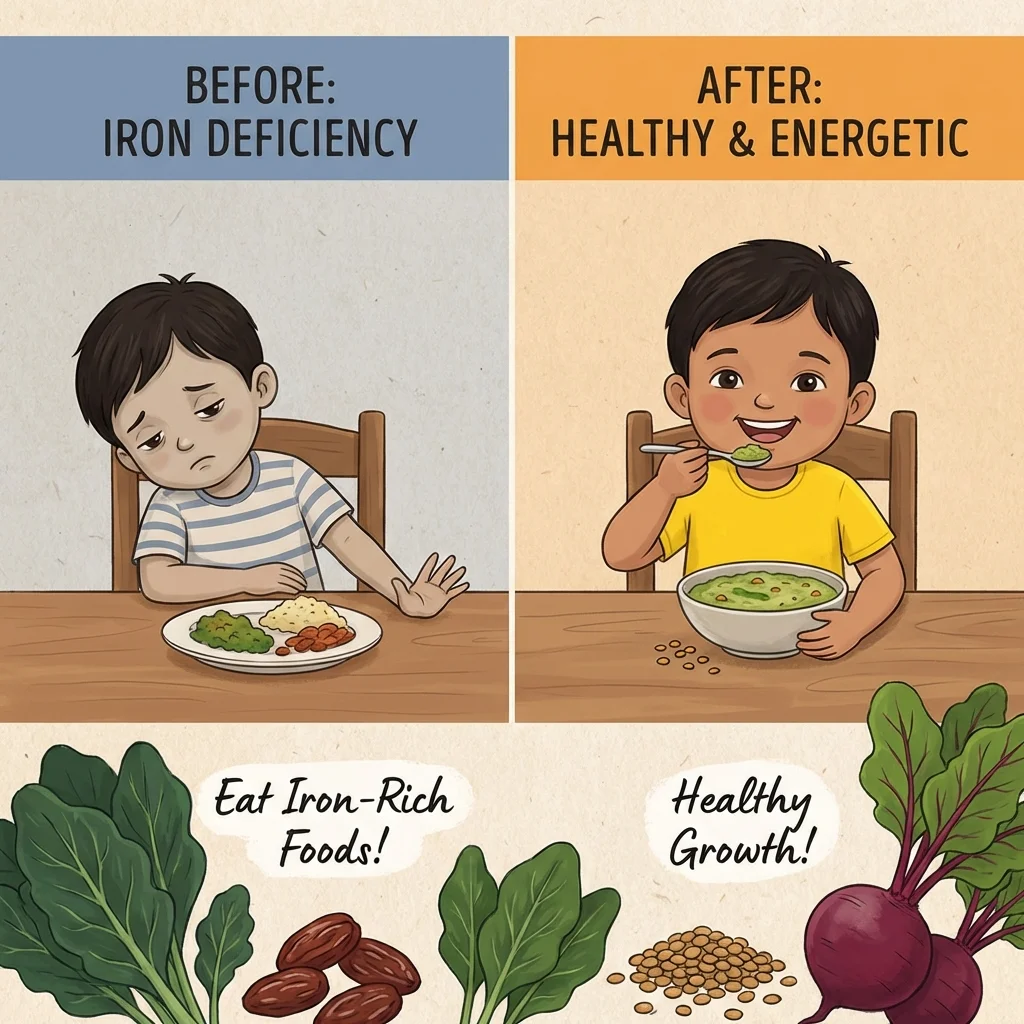
Is Your Child Tired or Just Being a Toddler? 5 Signs of Iron Deficiency
It's a statistic that should wake every parent up: according to NFHS-5 data, roughly two out of three Indian children under five are anaemic. That means at a typical birthday party, most of the kids in the room aren't getting enough iron.
Iron is the fuel that lets blood carry oxygen to the brain and body. Without enough of it, a child is biologically running on empty — and because iron deficiency builds slowly and silently, it's easy to mistake the signs for ordinary toddler behaviour.
Here are the five signs every parent needs to watch for, why they happen, and what to do about them.
Key Takeaways
- Iron-deficiency anaemia is extremely common in Indian children — and the symptoms are subtle.
- Watch for paleness, pica, unusual fatigue, poor appetite, and frequent infections.
- Most Indian kids eat plant (non-heme) iron, which needs a vitamin C "catalyst" to be absorbed well.
- Milk with meals blocks iron; lemon, guava, or orange alongside iron-rich food boosts it.
1. The "Pale" Check
Indian skin tones vary widely, so overall "paleness" is a poor test. Instead, look at the parts of the body where colour reflects blood, not skin.
Where to look: the inside of the lower eyelid, the gums, the tongue, and the nail beds. If these areas look washed-out — pale pink or almost white instead of a healthy vibrant red-pink — that's a strong red flag for anaemia. Check in natural daylight for the truest reading.
2. Pica (Eating Non-Food Things)
Does your child try to eat mud, chalk, wall paint, sand, or raw rice? This isn't simply "naughty" behaviour or a phase. It's a recognised condition called pica, and it is often the body's confused, desperate attempt to source missing minerals like iron and zinc. If you're seeing pica, it's worth mentioning to your paediatrician specifically.
3. Unexplained Fatigue
Toddlers are supposed to be little energy machines. The contrast usually tells the story:
- Typical: runs around for a couple of hours, then crashes for a nap.
- Possible deficiency: tires after 15 minutes of play, constantly asks to be carried, seems unusually "lazy" or listless, or is short of breath after mild activity.
Because oxygen delivery depends on iron, low iron shows up first as a child who simply runs out of steam far too quickly.
4. Poor Appetite (the Picky-Eater Cycle)
Here's the cruel trap: iron deficiency itself reduces appetite, which then makes the deficiency worse.
Low iron → child won't eat → iron drops further → appetite drops more.
If your child refuses food constantly, don't assume it's pure stubbornness before checking iron. As we explain in our guide to the picky eater's hidden mineral link, the same appetite-dulling loop shows up with zinc deficiency too.
5. Frequent Infections
Iron is essential for a healthy immune system. If your child seems to catch every cold, cough, and fever that passes through the house — and takes a long time to recover — depleted iron stores may be part of the picture.
The "Vegetarian" Challenge (and the Solution)
Most Indian children eat a largely vegetarian diet, and plant iron (called non-heme iron) is significantly harder for the body to absorb than the heme iron in meat. The good news: you can dramatically improve absorption with one simple habit.
The fix is a vitamin C catalyst. Vitamin C acts like a key that unlocks the iron from plant foods so the body can actually use it.
- Don't serve milk with an iron-rich lunch — the calcium in milk competes with and blocks iron absorption.
- Do squeeze fresh lemon over dal.
- Do serve an orange, guava, or amla alongside a ragi porridge or bajra roti.
Top Iron-Rich Indian Foods for Kids
- Ragi (finger millet) — the millet king, rich in both iron and calcium.
- Dates — nature's iron-rich sweetener.
- Moringa (drumstick) leaves — powder them into dal or add to parathas.
- Bajra (pearl millet) — great for warming winter rotis.
- Rajma, chana, and other legumes — pair with lemon or tomato for better absorption.
Swapping refined white rice and maida biscuits for whole millets is one of the highest-impact iron upgrades you can make.
Frequently Asked Questions
How is iron deficiency diagnosed in children? A simple blood test measuring haemoglobin (and often ferritin, which reflects iron stores) is the standard. If you notice several of the signs above, ask your paediatrician for one.
Can diet alone fix iron deficiency, or does my child need supplements? Mild cases often improve with dietary changes — more millets, legumes, and a vitamin C source at meals. Established anaemia usually needs a prescribed iron supplement plus diet changes. Always let a paediatrician guide dosing; never self-supplement iron.
Why does milk block iron absorption? Calcium and iron compete for absorption in the gut. A large glass of milk right alongside an iron-rich meal reduces how much iron the body takes up — so it's better to space milk away from the main iron meal.
At what age should I worry about iron? Iron needs are especially high from about 6 months (when a baby's birth iron stores run down) through the toddler years and again in adolescence. These are the windows to be most attentive.
Conclusion
If you spot several of these signs, talk to your paediatrician — a simple haemoglobin test gives clear answers. And often, a few everyday tweaks (swapping white rice for millet, adding a squeeze of lemon to dal) are enough to bring the sparkle back to your child's eyes. See how Rise Kids snacks help close the iron gap.
References & Scientific Sources
- National Family Health Survey (NFHS-5), India.
- ICMR-NIN 2020. Iron requirements for Indians.
- Indian Academy of Pediatrics. "Guidelines on Iron Deficiency Anemia."
- American Academy of Pediatrics. "Diagnosing Anemia in Children."
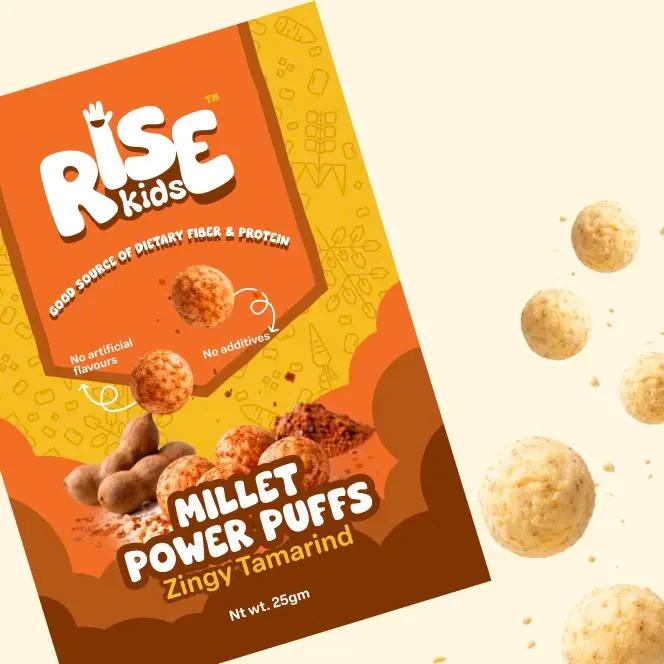
A tasty way to top up iron.
Our millet puffs are naturally rich in iron and zinc — a delicious daily boost for busy toddlers.
In this series
Iron, Zinc & Micronutrients
Share this knowledge
Help other parents raise healthy champions!