Whole Grains Decoded: Why "Enriched" Flour is Not Enough for Your Child
Walk down the bread or biscuit aisle, and you'll see labels like "Enriched Wheat Flour," "Multi-Grain," or "Fortified with Vitamins." They sound healthy, right? "Enriched" even sounds like a bonus.
But in the world of nutrition, "enriched" usually means the opposite of what you'd expect: "We stripped almost everything good away — and then sprinkled a few synthetic vitamins back on top."
For a growing child, the difference between a whole grain and a refined grain isn't a small detail. It shapes their energy, their digestion, their concentration in class, and even their long-term risk of lifestyle disease. To understand why whole grains are non-negotiable for kids, we need to look at the anatomy of a single grain.
Key Takeaways
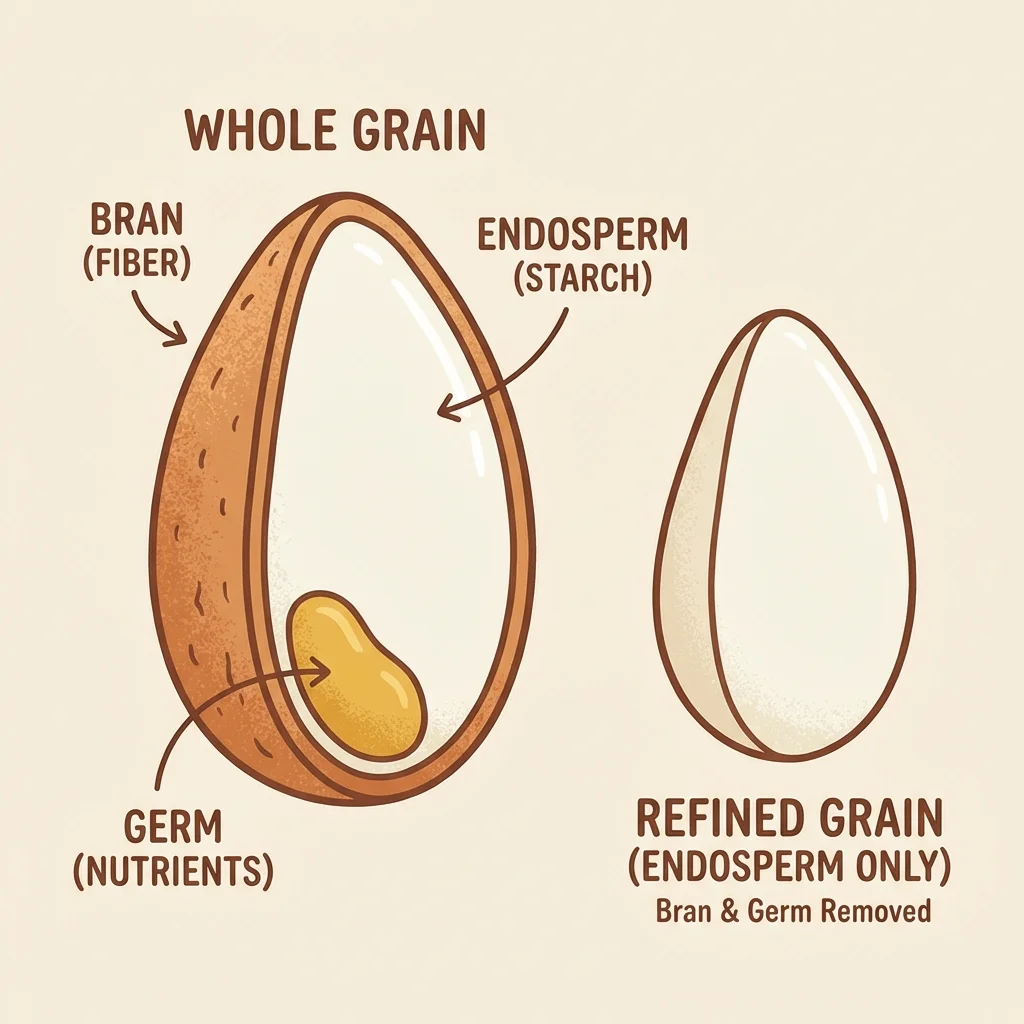
- A whole grain has three parts — bran, germ, and endosperm. Refining (making maida) throws away the bran and germ, keeping only the starchy endosperm.
- "Enriched" flour adds back 4–5 synthetic vitamins but cannot replace the lost fibre, healthy fats, and hundreds of natural plant compounds.
- Whole grains give kids steady energy, better digestion, and more nutrients per bite — refined grains spike blood sugar and leave them hungry again fast.
- The single most useful habit: read the first ingredient. It must say the word "Whole" (or name a millet like ragi/bajra).
The 3 Parts of a Grain
Imagine a seed. It has three distinct parts, and each one does a job:
- The Bran (the outer skin): The protective layer, packed with fibre, B vitamins, and iron. This is the part that keeps your child's digestion moving.
- The Germ (the embryo): The living heart of the seed that would sprout into a new plant. It is rich in healthy fats, vitamin E, and antioxidants that support brain development.
- The Endosperm (the food store): The large starchy middle that fuels the sprouting seed. It is mostly carbohydrate with a little protein — energy, but very little nourishment on its own.
Nature packaged all three together for a reason. The healthy fats in the germ actually help the body absorb the vitamins in the bran. Take them apart, and you break that synergy.
The Problem with "Refined" (Maida)
When manufacturers make white flour — maida — they mechanically strip away the bran and the germ. Why? To make the flour bright white, silky, fluffy, and shelf-stable. (There's a grim clue here: insects and pests often won't eat maida, because there's almost no nutrition left in it for them.)
What you're left with is only the endosperm — pure, fast-digesting starch. It behaves in the body a lot like refined sugar: a quick spike, then a crash. If you've ever wondered why ragi is treated so differently from maida, our Ragi vs. Maida breakdown shows exactly what refining costs you.
The Myth of "Enriched" Flour
To paper over this nutritional theft, manufacturers add back a handful of synthetic vitamins — usually iron and a few B vitamins like folic acid — and stamp the pack "Enriched Flour."
But look at everything that is not added back:
- Fibre: Gone.
- Healthy fats and vitamin E from the germ: Gone.
- Hundreds of phytochemicals and antioxidants: Gone.
It's like a crumbling house that's been given a fresh coat of paint. The label looks good on the outside, but the structure underneath is weak. "Enriched" restores maybe four or five nutrients out of the dozens that were lost.
Why Kids Specifically Need the "Whole" Package
1. Steady energy — no sugar highs and crashes
- Refined grains digest almost instantly. Blood sugar spikes, you get a burst of hyperactivity, and then comes the inevitable crash — the mid-afternoon crankiness and loss of focus.
- Whole grains have fibre that slows digestion. Energy is released gradually, like a steady drip, so your child stays calmer and more focused through school hours.
This is exactly the logic behind The 25% Rule: if snacks make up a quarter of your child's calories, those calories should come from grains that actually nourish, not just spike.
2. The fibre factor (and constipation)
Constipation is one of the most common complaints Indian parents bring to paediatricians — and low fibre is a leading cause. Whole grains act like a natural broom in the digestive tract, adding bulk and keeping everything moving smoothly. Millets are especially strong here: ICMR-NIN data on Indian millets shows dietary fibre ranging from roughly 6.6% to 15.9% across common varieties — far more than refined flour offers.
3. Nutrient density and brain fuel
The germ's healthy fats and vitamin E support the developing nervous system, while the bran delivers iron and B vitamins that fight the hidden hunger so common in children who look well-fed but are quietly under-nourished.
Whole Grain vs. Refined Grain: At a Glance
| What matters for kids | Whole Grain | Refined Grain (Maida) |
|---|---|---|
| Fibre | High | Almost none |
| Healthy fats / vitamin E | Present (germ) | Removed |
| Blood-sugar effect | Gradual, steady | Fast spike + crash |
| Natural antioxidants | Many | Stripped away |
| Effect on digestion | Keeps it moving | Can worsen constipation |
How to Spot the Real Deal in 5 Seconds
Ignore the front of the packet — that's marketing. Turn it over and read the ingredients. The first ingredient must clearly say:
- "Whole Wheat Flour"
- "Whole Grain Oats"
- "Ragi / Finger Millet Flour" or another named millet like bajra or jowar
If it simply says "Wheat Flour" (without the word whole) or "Refined Wheat Flour," that's maida in disguise — put it back on the shelf.
Frequently Asked Questions
Is "multi-grain" the same as "whole grain"? No. "Multi-grain" only means several types of grain were used — they can all still be refined. Look for the word "whole" in front of each grain, not just the number of grains.
Is maida actually harmful, or just less nutritious? For an occasional treat, an ordinary child is fine. The concern is daily reliance: when maida-based biscuits, breads, and snacks become everyday staples, kids lose out on fibre and nutrients meal after meal, and ride constant blood-sugar spikes.
At what age can my child eat whole grains? Whole grains like ragi, oats, and whole wheat are excellent from the start of solids (around 6 months) as soft porridges. Start smooth and well-cooked, and build texture as your baby grows.
Are millets better than whole wheat? Both are whole grains and both are far better than maida. Millets like ragi add extra calcium and iron and are naturally gluten-free, which makes them a valuable part of a varied grain rotation for Indian kids.
The Rise Approach
At Rise Kids, we don't refine and we don't "enrich." We use the grain exactly as nature packaged it — bran, germ, and all — because nature got the recipe right the first time. Whole millets mean real fibre, steady energy, and nutrients in every bite. See how we build our snacks.
References & Scientific Sources
- ICMR-NIN. "Nutrient Requirements for Indians, 2020" and "Research Highlights 2022–23" (millet composition).
- Whole Grains Council. "Whole Grains 101."
- Harvard T.H. Chan School of Public Health. "The Nutrition Source: Whole Grains."
- American Journal of Clinical Nutrition. "Whole grain consumption and health outcomes."
No maida. No palm oil. No nonsense.
Whole millets, natural seasoning, and calcium-rich goodness — snacking the way it should be.
Start here
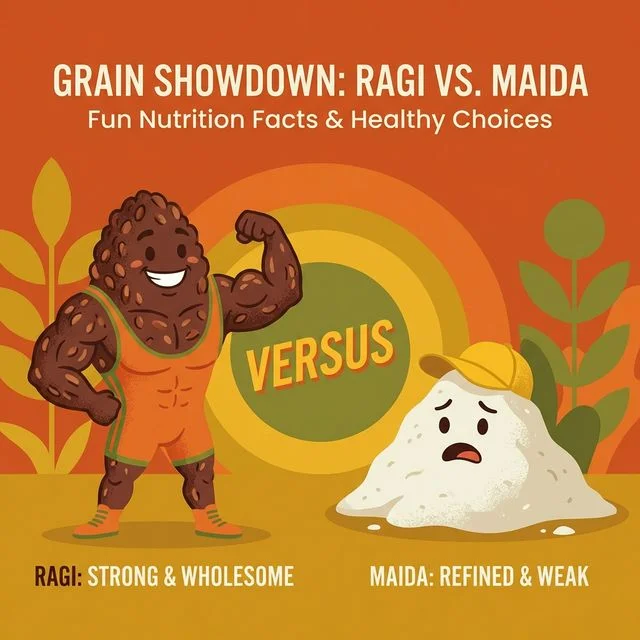
Ragi vs. Maida: The Nutrition Showdown Every Indian Parent Must See
Is Ragi really better than Maida? We break down the numbers. Spoiler: One builds bones, the other is just 'glue'.

Share this knowledge
Help other parents raise healthy champions!