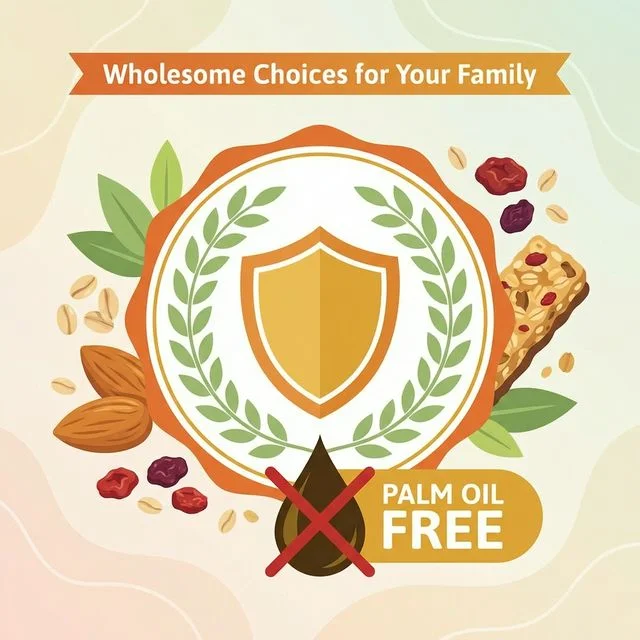
Pick up a packet of "healthy" biscuits for kids and flip it over to read the ingredients. Do you see "Edible Vegetable Oil" or "Palmolein"?
That is palm oil — and it is quietly one of the most common, and most controversial, ingredients in the food your child eats every day. It's cheap, it's shelf-stable, and it's almost everywhere: biscuits, chocolates, instant noodles, bread spreads, even some baby formulas.
At Rise Kids, we have a zero-tolerance policy for palm oil. We don't use it, and we never will. Here's why that was one of our easiest decisions — and why it's worth checking your own labels today.
Key Takeaways
- Palm oil hides behind 200+ label names — "vegetable oil," "palmolein," "palmitate," and more.
- In young children, palm oil can bind with calcium in the gut, reducing calcium absorption and causing harder stools.
- It is a leading driver of rainforest destruction and the habitat loss pushing orangutans toward extinction.
- Better fats — ghee, butter, and cold-pressed coconut oil — are whole foods that are more stable and don't come with these costs.
1. The Calcium Thief (the health impact)
Palm oil is added to baby formula and toddler snacks partly because it's rich in palmitic acid, a fatty acid also found in breast milk. On paper that sounds reassuring — but the molecular structure of the palmitic acid in palm oil is different from the kind in breast milk, and that difference matters.
The "soap" effect: When a baby digests palm oil, its palmitic acid binds with calcium in the gut. Instead of that calcium being absorbed to build bones, it forms insoluble "calcium soaps" that are simply passed out of the body.
- Result 1: Reduced calcium absorption — a concern for growing bones, especially given that ICMR-NIN 2020 actually raised the calcium requirement for Indians to around 1000 mg/day.
- Result 2: Harder stools and more constipation, because those calcium soaps stiffen the stool.
Clinical research on infant formula has repeatedly found that babies fed palm-olein-free diets show softer stools and better bone mineral content. When a gentler fat is available, why risk it?
2. The Orangutan Crisis (the environmental impact)
This is the heartbreaking part. Palm oil is grown in tropical rainforests — the exact same home as the orangutan.
To feed the world's appetite for the cheapest possible oil, vast stretches of rainforest in Indonesia and Borneo are burned and cleared every single day.
- Habitat loss: Orangutans are losing their forest homes at an alarming rate.
- Extinction risk: The Bornean orangutan is now classified as Critically Endangered.
- Climate cost: Those peatland fires release enormous amounts of carbon, worsening climate change.
Every time we buy a product made with unsustainable palm oil, we are — usually without realising it — helping fund that destruction. It's one of the clearest examples of how a small daily choice at the supermarket ripples out across the planet.
3. The "Hidden" Names
Palm oil is a master of disguise. It hides behind more than 200 different names on ingredient labels, which is exactly why so many well-meaning parents buy it without knowing. If you see any of these, it's very likely palm oil:
- Vegetable Fat / Vegetable Oil (with no specific source named)
- Palmolein / Palm Olein
- Palmitate
- Stearic Acid / Glyceryl Stearate
- Sodium Lauryl Sulfate (in shampoos and toothpastes)
The simple rule: if a label says "vegetable oil" but won't tell you which vegetable, assume it's palm.
What We Use Instead
We use butter, ghee, or cold-pressed coconut oil. Here's the reasoning:
- They're whole foods, not industrially fractionated oils.
- They're chemically stable, so they resist the kind of oxidation that produces harmful compounds when cheap oils are processed at high heat.
- They taste better — and they don't cost a rainforest.
The trade-off is honest: real butter costs us around 4x more than palm oil. But we believe your child's health, and the planet they'll grow up on, is worth that premium.
Frequently Asked Questions
Is all palm oil bad, or just unsustainable palm oil? Environmentally, certified-sustainable palm oil is less damaging than unregulated palm oil. But the digestive concerns for young children — the calcium-binding "soap" effect — apply regardless of how the palm was farmed. For kids' snacks, we simply avoid it.
Is palm oil banned in India? No. It's completely legal and extremely widely used, which is why label-reading matters. FSSAI allows it, and it appears in a huge share of packaged foods precisely because it's cheap.
What's a quick way to avoid palm oil while shopping? Read the fats in the ingredient list. If it says "edible vegetable oil," "palmolein," or "vegetable fat" without naming a specific source like sunflower, groundnut, or coconut, put it back.
Does palm oil affect adults too? The calcium-soap concern is most relevant for infants and toddlers. For everyone, though, the environmental and climate costs of unsustainable palm oil are the same.
Conclusion
Next time you're in the supermarket aisle, take five seconds to read the back of the pack. If you see "vegetable oil" without a named source, choose something else. Your purchase has power. Choose palm-oil free — for their tummy, and for the trees. See how Rise Kids snacks are made.
References & Scientific Sources
- Koo, W. W., et al. "Reduced bone mineral content in infants fed a palm olein-containing formula." Pediatrics.
- ICMR-NIN 2020. Recommended Dietary Allowances for Indians (calcium).
- World Wildlife Fund (WWF). "Palm Oil and Biodiversity Loss."
- European Food Safety Authority (EFSA). Reports on 3-MCPD esters in processed vegetable oils.
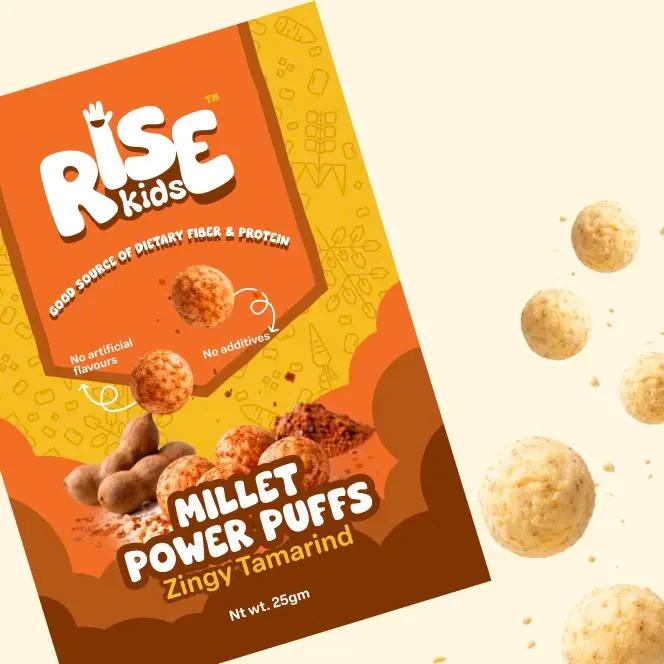
No maida. No palm oil. No nonsense.
Whole millets, natural seasoning, and calcium-rich goodness — snacking the way it should be.
Start here
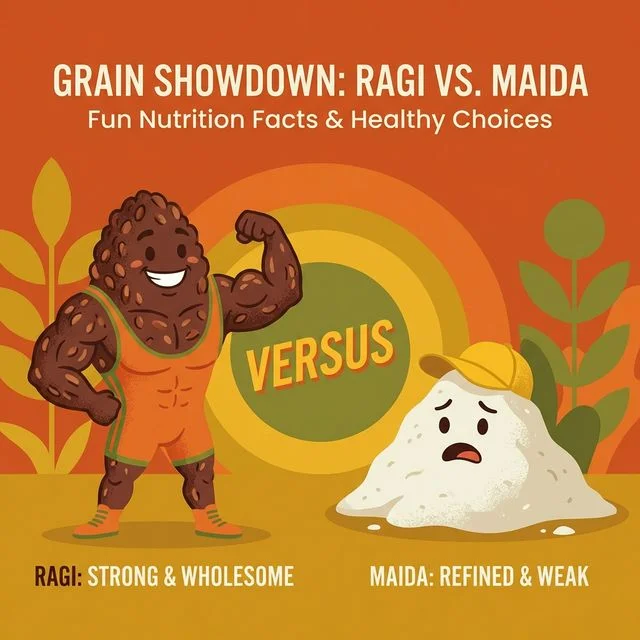
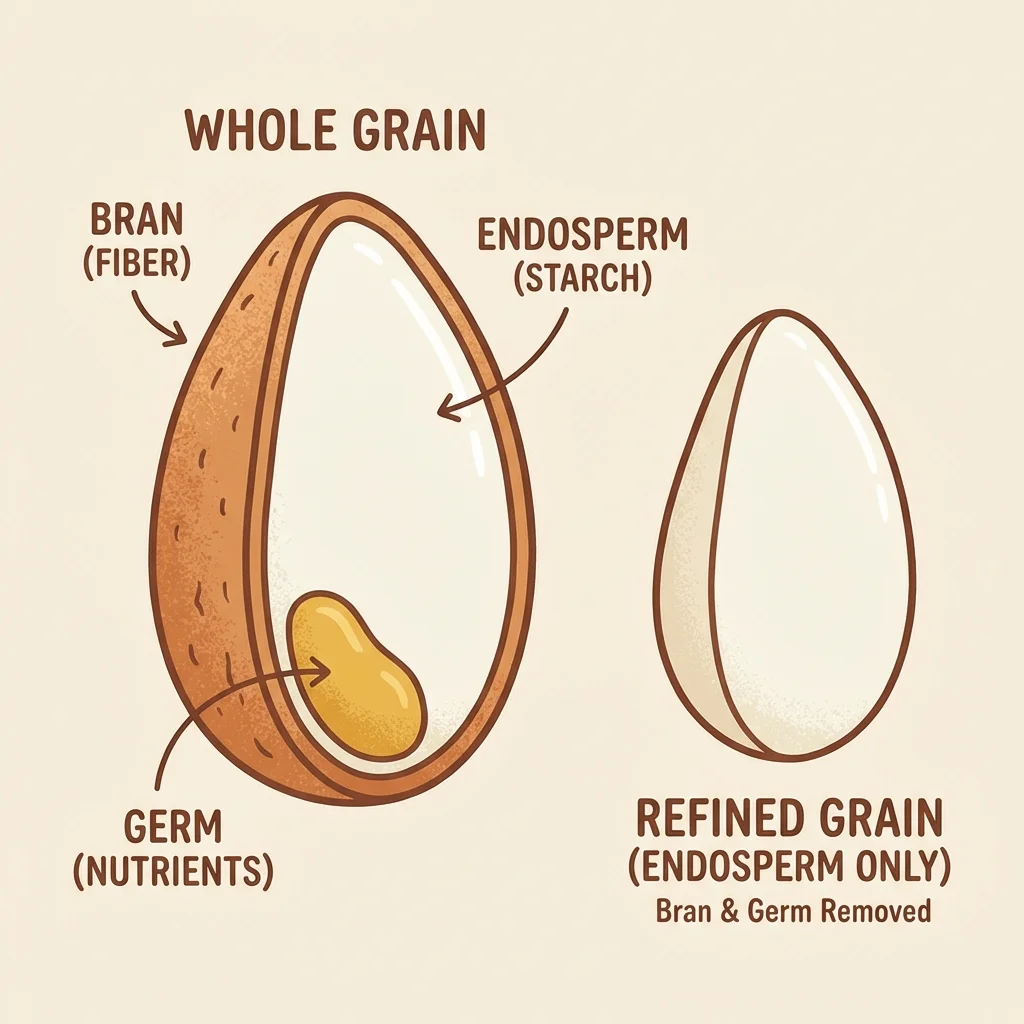
Ragi vs. Maida: The Nutrition Showdown Every Indian Parent Must See
Is Ragi really better than Maida? We break down the numbers. Spoiler: One builds bones, the other is just 'glue'.
Share this knowledge
Help other parents raise healthy champions!