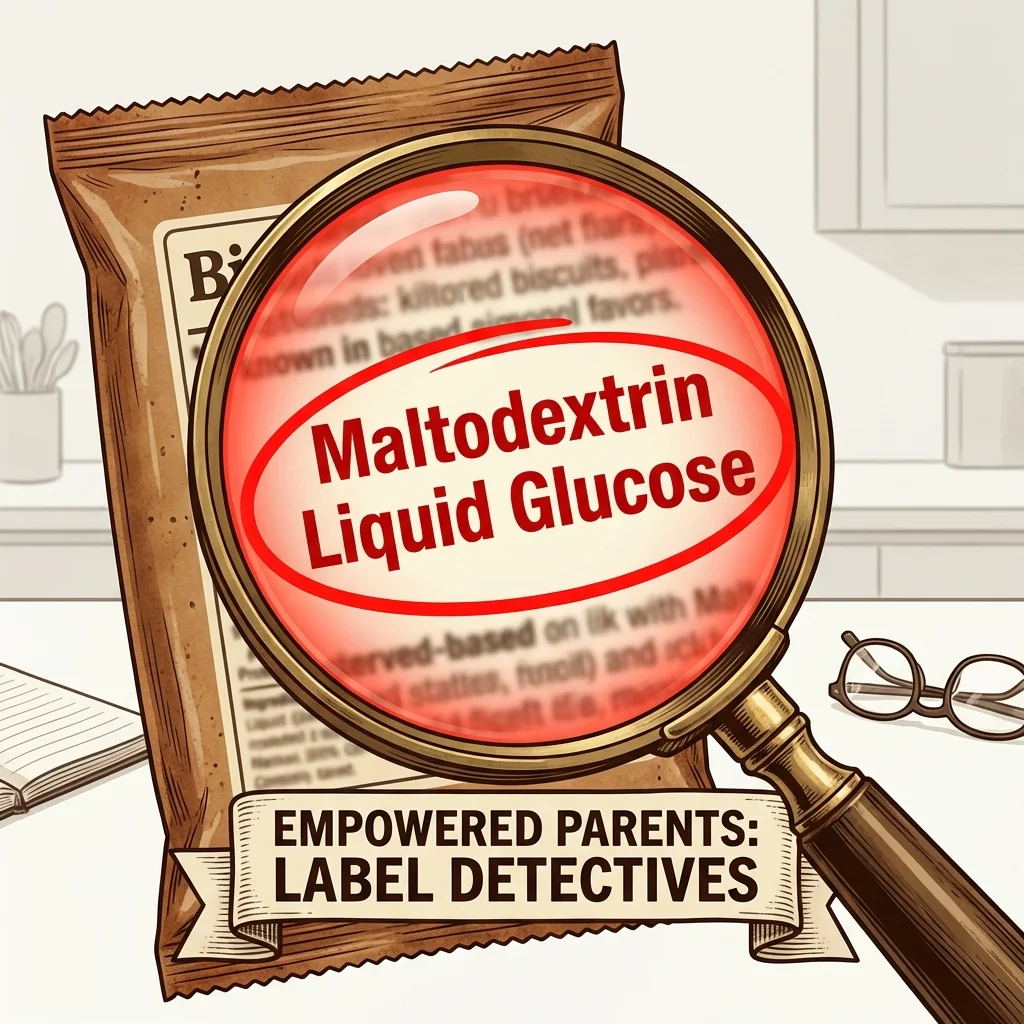
Food companies are smart. They know you're busy, and they know you genuinely want to buy healthy food for your child. So they put reassuring words like "Natural," "Whole Wheat," and "No Added Sugar" on the front of the pack, in big friendly letters.
But the real story is always on the back. The front is marketing; the back is science. Here is the 5-Second Label Test — a simple, repeatable routine to separate real food from junk food in disguise, even when you're rushing through the aisle with a toddler on your hip.
Key Takeaways
- Ignore the front of the pack — it's designed to sell, not inform.
- Ingredients are listed by weight, so the first 2–3 tell you what the product really is.
- Sugar hides under many names (maltodextrin, liquid glucose, invert syrup) to avoid appearing first.
- A short ingredient list of recognisable foods almost always beats a long one full of codes.
Step 1: Ignore the Front
Seriously — don't even read it. "Natural," "goodness of," "made with real fruit," "immunity" — these front-of-pack claims are largely unregulated marketing language. Flip straight to the back and go to the ingredients list.
Step 2: The "First 3 Ingredients" Rule
Under FSSAI rules in India, ingredients must be listed in descending order by weight. That means the first few ingredients make up the bulk of what your child is actually eating.
- The rule: the first 3 ingredients define the product.
- The trap: if ingredient #1 or #2 is sugar (or one of its code names), it's a dessert, not a snack — no matter what the front says.
- The goal: the first ingredient should be a whole grain — "Whole Wheat Flour," "Ragi Flour," "Rolled Oats." If it just says "Wheat Flour" without the word whole, that's maida.
Step 3: Spot the "Hidden Sugars"
Here's a clever trick manufacturers use: they split sugar into several different forms so that no single "sugar" appears near the top of the list — even though the total sugar is high. Watch for these aliases:
- Maltodextrin: a starch that spikes blood sugar even faster than table sugar.
- Liquid glucose / glucose syrup: extremely common in biscuits and toffees.
- Invert syrup / invert sugar: just another sugar syrup.
- Fruit juice concentrate: sounds wholesome, but it's fibre-stripped fruit sugar.
- Dextrose, sucrose, high-fructose corn syrup: all sugar by another name.
If you add these up in your head, "no added sugar" claims often fall apart.
Step 4: The "Serving Size" Trick
Now glance at the nutrition table. Looks low in sugar? Check the serving size first.
- The trick: the nutrition may be listed per "1 biscuit" (say, 10 g), while your child will happily eat four or five.
- The fix: always compare products using the "per 100 g" column. It's the only apples-to-apples way to judge, and it strips away the serving-size illusion.
Step 5: The "Number of Ingredients" Test
Finally, just count.
- Good sign: 5–7 recognisable ingredients — e.g. dates, oats, nuts, ragi, ghee.
- Warning sign: 15+ ingredients, several of which are codes you can't pronounce (Emulsifier 322, Acidity Regulator 330, Raising Agent 500(ii), artificial flavours).
A short list of real foods is one of the most reliable quality signals there is.
Why This Habit Works (the Evidence)
This isn't just intuition. In a large ICMR-NIN study of front-of-pack labelling with over 3,000 participants, clear warning labels were the most effective format at steering people away from unhealthy products. In other words: the more transparent and readable a label is, the better choices families make. Until warning labels are universal in India, you are the label-reader — and these five steps are your shortcut.
Frequently Asked Questions
What does "made with whole grains" actually guarantee? Very little. It can be technically true even if whole grains are a tiny fraction of the product. Check whether a whole grain is the first ingredient rather than trusting the front-of-pack claim.
Are "no added sugar" and "sugar free" the same? No. "No added sugar" means no sugar was added during processing — but the product can still be loaded with naturally occurring sugars or fruit concentrates. "Sugar free" has its own defined threshold. Always cross-check the ingredient list.
How do I judge fats on a label? Look for a named fat like groundnut, sunflower, or coconut oil. Vague terms like "edible vegetable oil" usually mean palm oil, which is worth avoiding in kids' snacks.
Is a longer nutrition table always worse? Not the nutrition table — the ingredients list. A long ingredients list of additives and codes is the red flag; a detailed nutrition breakdown is actually helpful.
Conclusion
You don't need a PhD in food chemistry to feed your child well — you need about five seconds. Flip the pack, read the first line, spot the hidden sugars, and count the ingredients. If it reads like a recipe your grandmother could make, buy it. If it reads like a laboratory experiment, put it back. Want to see what a genuinely clean label looks like? Read what "clean label" really means, or see our own ingredient lists.
References & Scientific Sources
- Food Safety and Standards Authority of India (FSSAI). Packaging & Labelling Regulations.
- ICMR-NIN 2022–23. Front-of-pack nutrition labelling study.
- Harvard T.H. Chan School of Public Health. "Spotting Added Sugar on Nutrition Labels."
- Mayo Clinic. "Nutrition facts label: A guide."
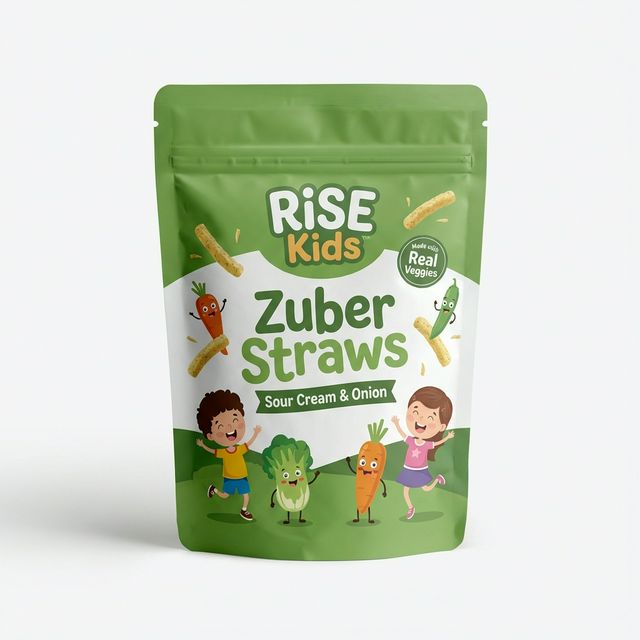
A label you can actually trust.
Short ingredient list, nothing artificial — read our pack and see the difference for yourself.
In this series
Reading Food Labels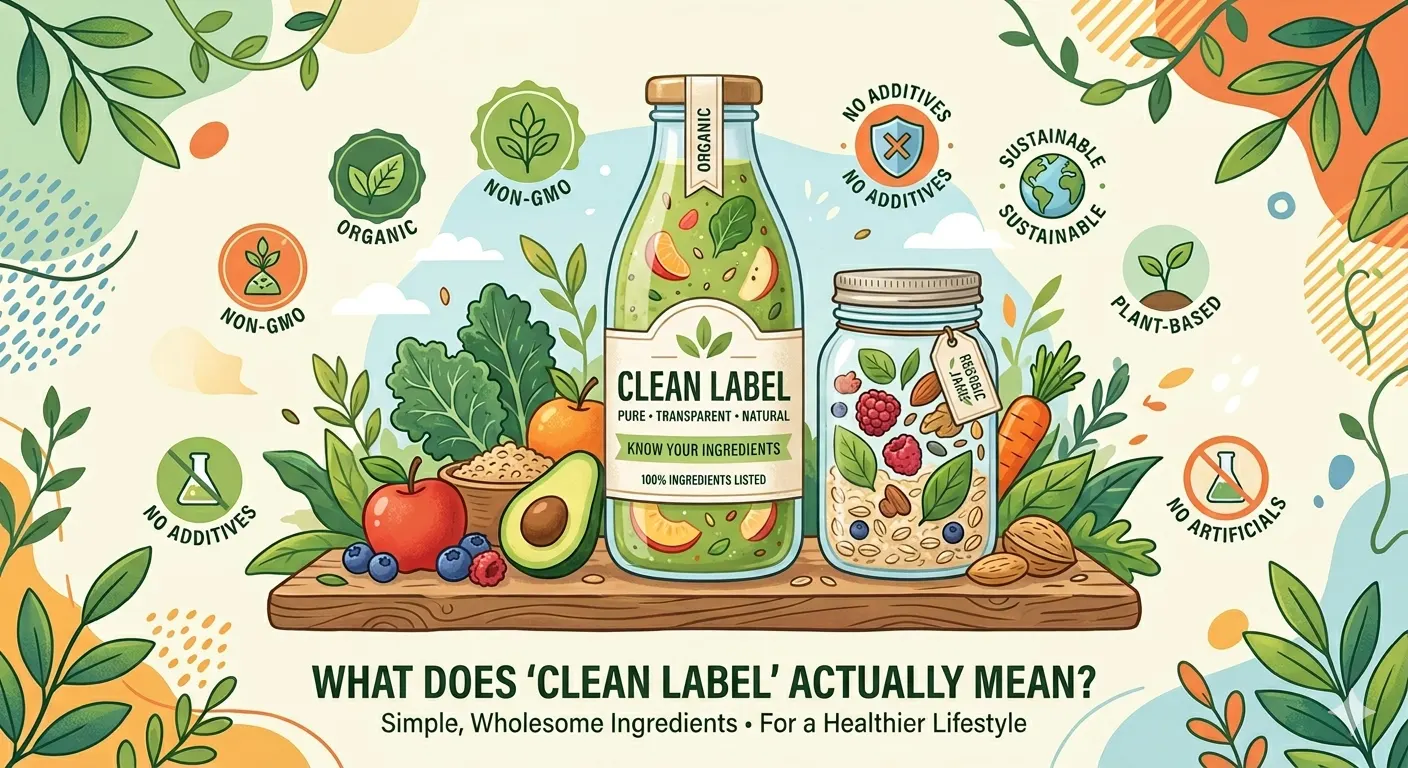
Share this knowledge
Help other parents raise healthy champions!