Every parent knows the scene: your child wants something crunchy. And the easiest, loudest, most heavily-marketed option on every shop shelf is a shiny packet of potato chips. They're cheap, they're moreish, and they're everywhere.
But that crunch comes at a cost. Behind the fun packaging, most potato chips are a combination of refined starch, palm oil, and salt — calories with almost nothing a growing body can use. The good news: you don't have to choose between "crunchy" and "healthy." Baked millet puffs deliver the same satisfying crunch with real nutrition behind it. Here's the honest, side-by-side comparison.
Key Takeaways
- Most potato chips are refined starch fried in palm oil — high in calories and unhealthy fat, low in fibre and nutrients.
- Millet puffs are typically baked (not fried), made from whole millets, so they bring fibre, protein, and minerals to the same crunch.
- The crunch craving is real and normal — the fix isn't banning it, it's swapping to a better-built crunch.
- Always read the label: look for baked whole millets and a named oil, not "edible vegetable oil."
Why Kids Crave the Crunch (and Why That's Fine)
Crunch is genuinely satisfying — the sound and texture make a snack feel more fun and filling. There's nothing wrong with the craving itself. The problem is only what usually delivers that crunch: deep-fried refined potato. Once you swap the source of the crunch for something nutrient-dense, the craving becomes an opportunity to nourish rather than a nutritional write-off.
The Nutrition Comparison
Here's how a typical serving stacks up. (Exact figures vary by brand — always check the pack.)
| What matters for kids | Potato Chips | Baked Millet Puffs |
|---|---|---|
| Cooking method | Usually deep-fried | Usually baked / roasted |
| Main ingredient | Refined potato starch | Whole millets (ragi, jowar, bajra) |
| Fat | High, often from palm oil | Lower, from better oils |
| Fibre | Very low | Higher (from whole millets) |
| Protein | Minimal | Meaningful (millets carry protein) |
| Micronutrients | Largely absent | Iron, calcium, magnesium |
| Blood-sugar effect | Fast spike | Steadier, slower release |
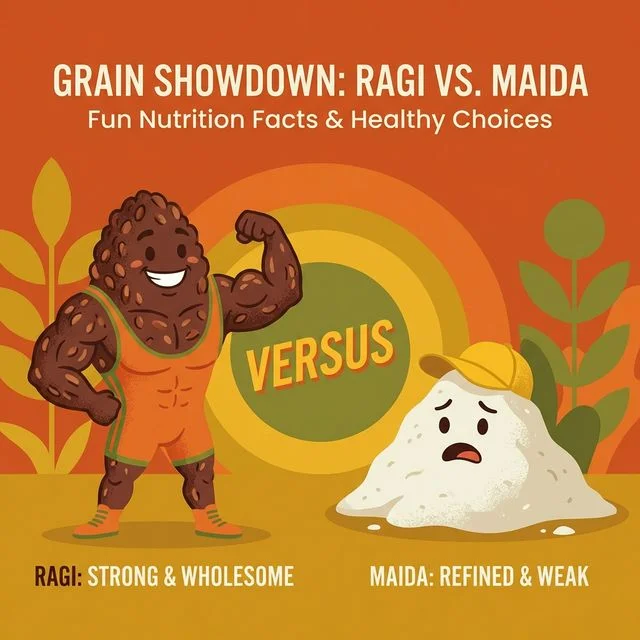
The pattern is the same one we see with ragi vs maida and whole grains vs refined flour: the refined option fills the tummy, while the whole-food option actually feeds the body.
The Two Hidden Problems With Chips
1. Palm oil
Most mass-market chips are fried in palm oil because it's cheap and shelf-stable. But palm oil is high in saturated fat and carries real health and environmental concerns — especially for young children, whose small bodies don't need a daily dose of it. If a chip label says "edible vegetable oil" without naming the source, assume palm.
2. Refined starch = empty calories
Potato chips are essentially refined carbohydrate. Like maida, that means a fast blood-sugar spike, a quick crash, and very little fibre or protein to keep a child genuinely satisfied — which is why one packet is never quite enough.
Why Baked Millet Puffs Win the Crunch
Millet puffs start from a completely different place: whole millets, baked rather than fried. That single difference changes everything.
- Fibre and protein come built in, so the snack actually satisfies.
- Baking, not frying means far less of the fat load that comes with deep-frying in cheap oil.
- Minerals like iron, calcium, and magnesium ride along, helping close the hidden-hunger gap that plagues so many well-fed kids.
- Steadier energy — the slower blood-sugar release means no mid-afternoon crash.
This is exactly the thinking behind The 25% Rule: snacks are about a quarter of your child's daily calories, so they should pull a quarter of the nutritional weight — not just fill the gap with fried starch.
How to Choose a Genuinely Better Puff
Not every "millet" or "baked" snack on the shelf is created equal. Before you buy, flip the pack and check:
- First ingredient is a whole millet (ragi, jowar, bajra, foxtail) — not refined flour.
- Baked or roasted, not fried.
- A named oil (or none) — no vague "edible vegetable oil" / palm oil.
- Short ingredient list of recognisable foods, not a page of codes and additives.
Frequently Asked Questions
Are millet puffs actually healthier than potato chips? Yes, meaningfully — when they're baked and made from whole millets. They bring fibre, protein, and minerals that chips lack, and they skip the deep-frying and palm oil that make chips so calorie-dense.
Are all "baked" chips a healthy choice? Not automatically. "Baked" is better than fried, but a baked snack made from refined potato or maida is still low in nutrition. The key is the base ingredient — look for whole millets, not just the word "baked."
Will my child even like millet puffs if they love chips? Usually, yes — the crunch and seasoning are what kids are really after, and good millet puffs deliver both. Flavours like tangy tamarind or mild chilli make the switch easy.
Can toddlers eat millet puffs? Many are suitable for young children as a melt-and-crunch finger food, but always match the texture to your child's stage and check the pack. For very little ones, see our guide to safe finger foods.
How often can kids have millet puffs? As an everyday snack, they're a far better fit than chips — but the golden rule still applies: offer snacks on a schedule rather than constant grazing, in sensible portions.
The Bottom Line
The crunch craving isn't the enemy — the default option is. Swap deep-fried, palm-oil potato chips for baked whole-millet puffs, and your child gets the same satisfying crunch with fibre, protein, and minerals instead of empty calories. It's one of the simplest, highest-impact snack upgrades you can make.
That's exactly why we built Rise Kids Millet Power Puffs — real crunch, baked from whole millets, no maida and no palm oil. See the range.
References & Scientific Sources
- ICMR-NIN. "Nutrient Requirements for Indians, 2020" and millet composition data (2022–23).
- World Health Organization (WHO). Guidance on saturated fat and free sugars for children.
- Indian Food Composition Tables (IFCT), NIN. Millet and refined-grain composition.
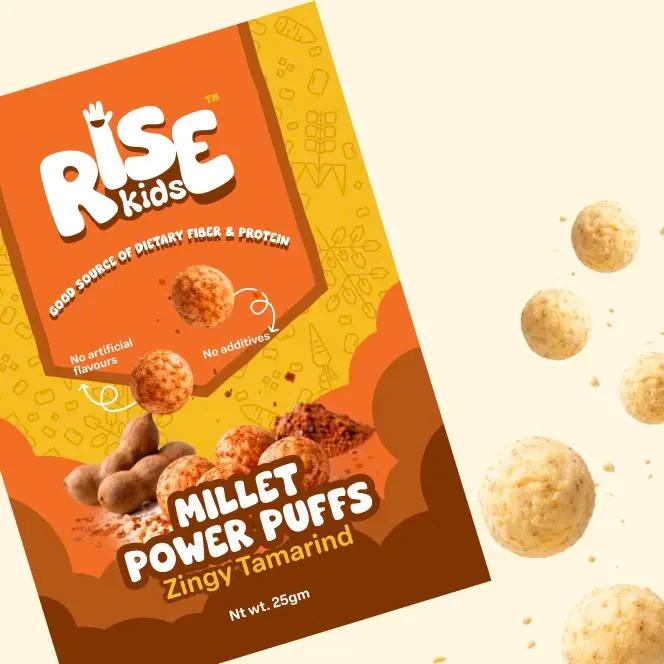
No maida. No palm oil. No nonsense.
Whole millets, natural seasoning, and calcium-rich goodness — snacking the way it should be.
Start here
Ragi vs. Maida: The Nutrition Showdown Every Indian Parent Must See
Is Ragi really better than Maida? We break down the numbers. Spoiler: One builds bones, the other is just 'glue'.
Share this knowledge
Help other parents raise healthy champions!