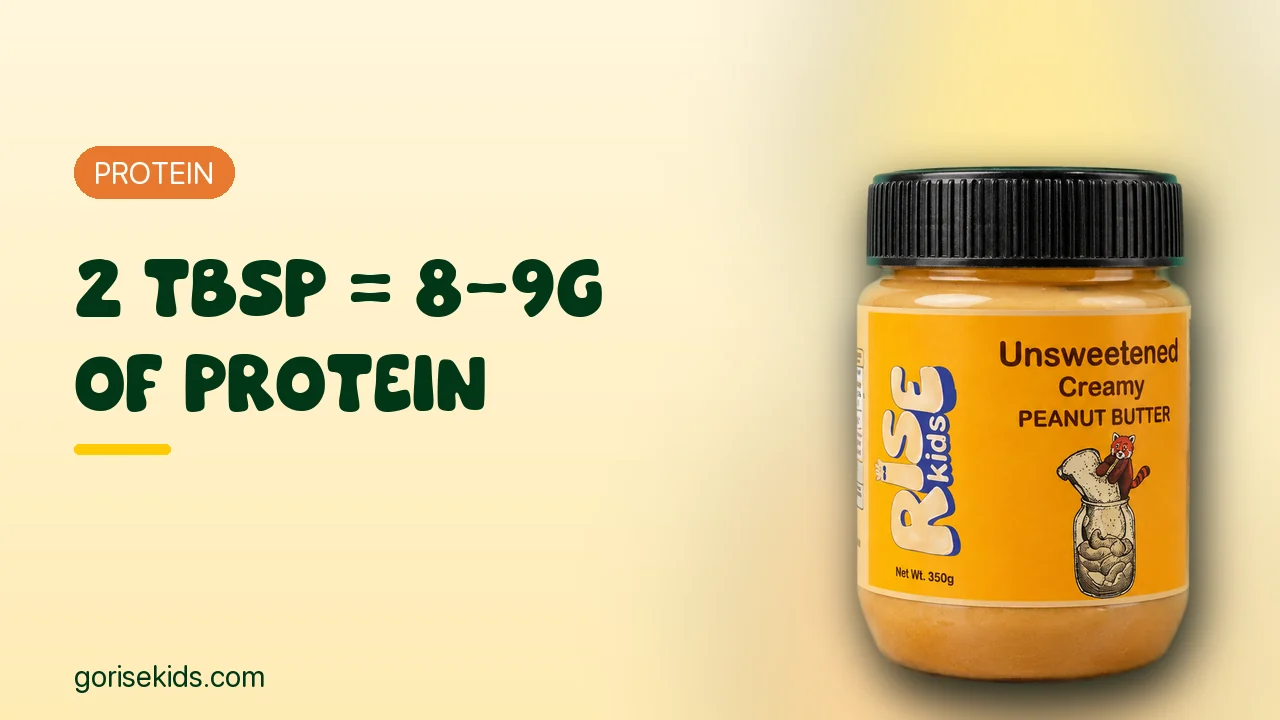
Two Tablespoons, 8–9g of Protein: The Peanut Butter Math Every Parent Should Know
Nutrition advice is often vague — "eat more protein," "give healthy fats." Parents don't need vibes; they need numbers they can act on.
So here's a concrete one worth remembering: two tablespoons of peanut butter — about 35g — contains roughly 8–9g of protein. That single, repeatable fact can quietly reshape how you build your child's meals.
Let's unpack what that number actually means in practice.
Key Takeaways
- 2 tablespoons (~35g) of peanut butter ≈ 8–9g of protein — about the same as 1½ eggs.
- That's nearly half the daily protein target for a 4–6 year old (roughly 16–19g per ICMR-NIN).
- It's an efficient serving: a lot of protein in a small, no-cook spoonful.
- Peanut butter is calorie-dense, so two tablespoons is a serving — not a starting point.
- The number only holds for natural peanut butter. Sweetened jars dilute the protein with sugar.
What 8–9 Grams Really Looks Like
Numbers mean more in context. Here's how two tablespoons of peanut butter compare to other everyday protein sources:
| Food | Portion | Protein |
|---|---|---|
| Peanut butter | 2 tbsp (~35g) | ~8–9g |
| Egg | 1 large | ~6g |
| Milk | 1 cup (200ml) | ~6–7g |
| Cooked dal | 1 small bowl | ~4–5g |
| Curd | ½ cup | ~4g |
Two tablespoons of peanut butter out-protein a bowl of dal — without a pot, a flame, or twenty minutes of your morning. For a deeper look at why that matters, see why peanut butter is the easiest protein source.
Half a Day's Protein in One Spread
A child aged 4–6 years needs roughly 16–19g of protein per day. (Older, school-age children need more.) See our full protein guide for the age-by-age breakdown.
Against that target, two tablespoons of peanut butter — ~8–9g — covers close to half the day in a single serving. Stack it onto a slice of whole-grain toast at breakfast, and you've handled a large chunk of the daily requirement before the school bell.
Why the "Where" Matters as Much as the "How Much"
Peanuts are a legume, so their protein is rich in lysine — the one amino acid most Indian grains are short on. That means where you put those two tablespoons changes their value.
Spread peanut butter on a whole-grain roti or toast and the two foods complete each other into a stronger, more complete protein — the same clever pairing behind dal and rice, in a form kids will finish.
How to Actually Measure It
"Two tablespoons" trips people up, so keep it simple:
- One level tablespoon ≈ 16g, so two tablespoons is about 30–35g — roughly the amount that covers a slice of toast generously.
- No need to weigh every time. Once you've eyeballed it on a slice of bread once or twice, you'll have a reliable mental picture.
Don't Forget: It's Calorie-Dense
That protein comes packaged with healthy fats, which makes peanut butter energy-dense. For an active, growing child that's a feature, not a flaw — but it means two tablespoons is a serving, not a free-for-all. Think of it as a protein topping: a spread, a stir-in, a dip — so many easy ways to use it — rather than a bowlful on its own.
The Fine Print on the Number
The 8–9g figure assumes a natural peanut butter — ideally just peanuts. Many supermarket jars pad themselves out with sugar, salt and palm oil, which means less peanut (and less protein) per spoon, plus the sugar spike you were trying to avoid.
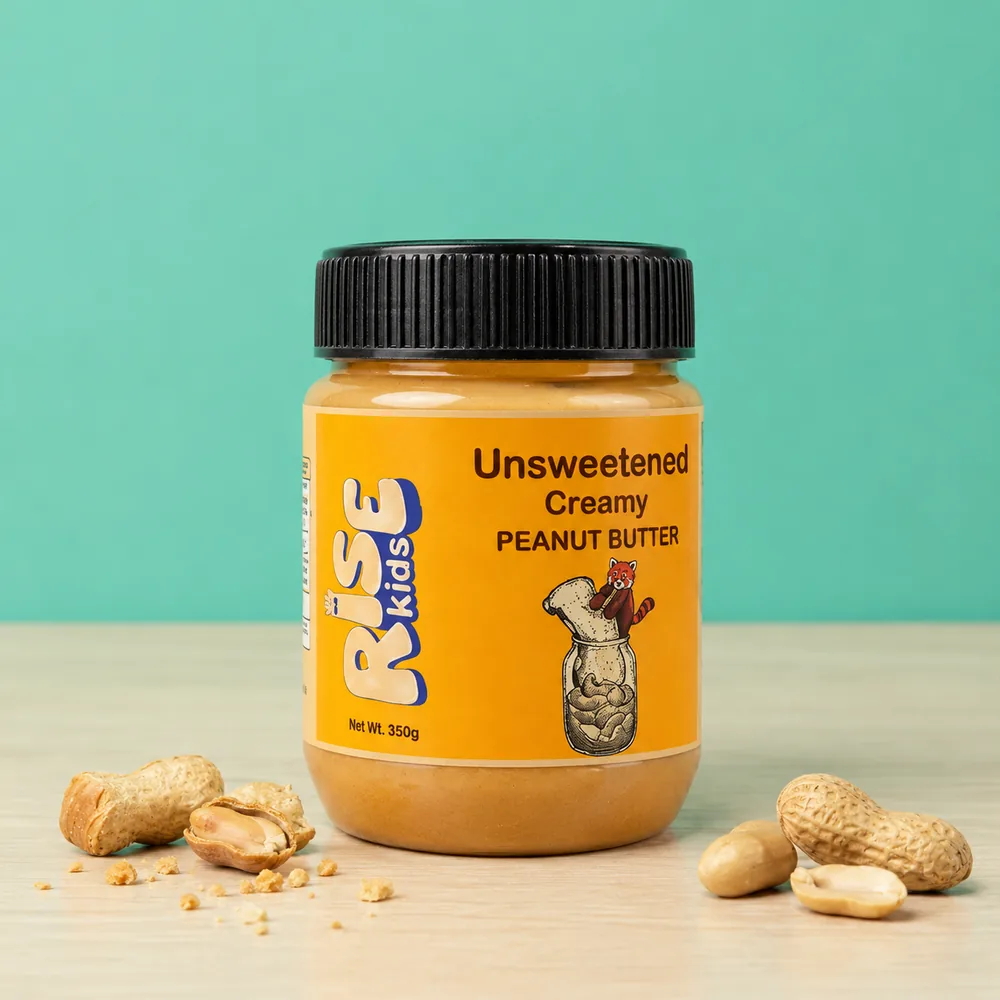
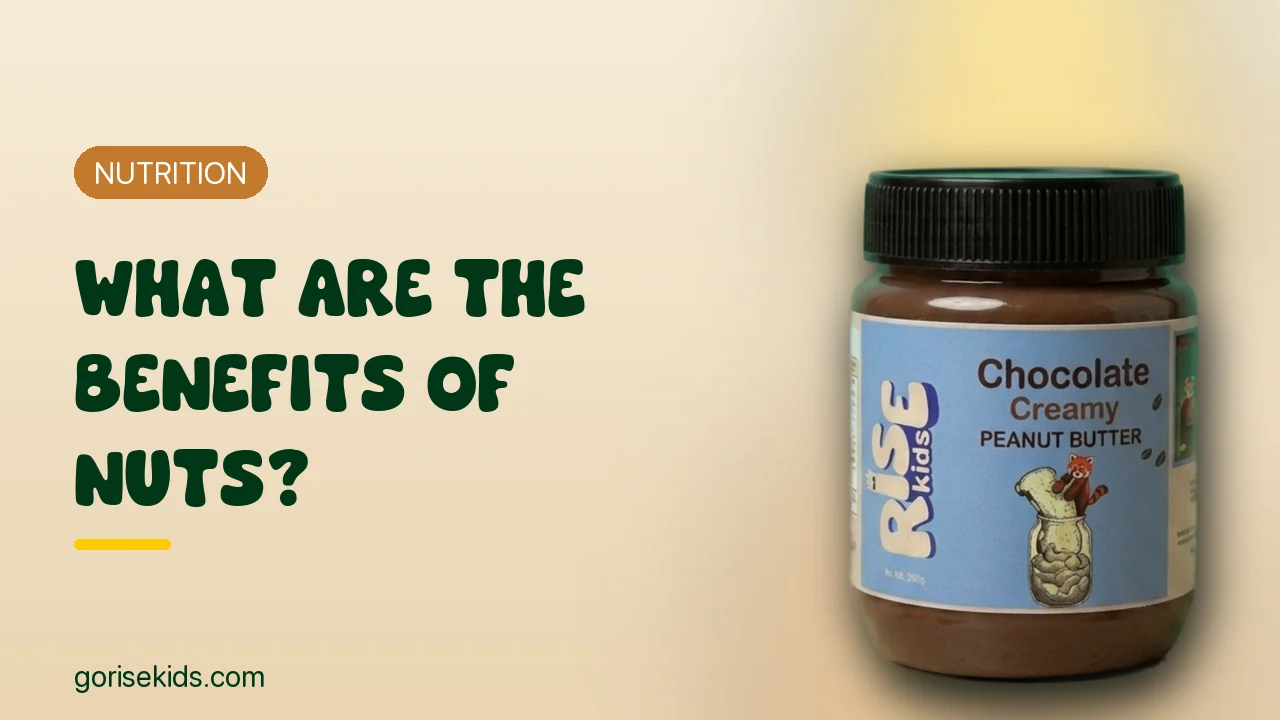
So check the label. Our Unsweetened Creamy Peanut Butter is dry-roasted peanuts and nothing else — which is exactly why the protein math holds up. For a lightly sweet option, the Chocolate Creamy Peanut Butter uses a tiny amount of dates rather than refined sugar.
A Quick Safety Note
- Under four? Spread thin or stir in — never thick spoonfuls (choking risk).
- Allergy: Peanut is a common allergen. Introduce early, in small amounts, and check with your paediatrician if there's a family history.
Frequently Asked Questions
How much protein is in a tablespoon of peanut butter? Roughly 4–4.5g per level tablespoon, so about 8–9g in the standard two-tablespoon serving.
Is 8–9g of protein a lot for a child? It's significant — close to half the daily requirement for a 4–6 year old. Spread across the day with other sources, peanut butter makes hitting the target much easier.
Does the protein change if I use sweetened peanut butter? Yes, indirectly. Added sugar and oil mean less peanut per spoon, so you get a bit less protein — and more sugar. A natural, unsweetened jar keeps the protein high.
Can I rely on peanut butter alone for my child's protein? No — it's a brilliant contributor, not the whole picture. Combine it with dairy, dal, eggs or soy across the day for balanced protein and amino acids.
Conclusion
Keep one number in your back pocket: two tablespoons, 8–9 grams. It turns a vague goal ("more protein") into a concrete, no-cook move you can make at any meal.
Start with a clean, natural jar, spread it on something whole-grain, and let the math work in your child's favour.
References & Scientific Sources
- Indian Council of Medical Research & National Institute of Nutrition. "Nutrient Requirements for Indians 2020." ICMR-NIN. https://www.nin.res.in
- National Institute of Nutrition. "Indian Food Composition Tables 2017." NIN.
- U.S. Department of Agriculture. "FoodData Central — Peanut butter, smooth." USDA.
Protein by the spoonful.
Just peanuts — nothing else. Two tablespoons of our creamy peanut butter deliver 8g of plant protein your child will actually ask for.
Part of
Peanut Butter & NutsStart here
Why Peanut Butter Is the Easiest Way to Add Protein to Your Child's Diet
Two tablespoons of peanut butter can add 8–9g of protein — no cooking, no fuss. Here's why a humble jar of peanut butter is one of the simplest protein wins for busy Indian families.

Share this knowledge
Help other parents raise healthy champions!