For something so small, nuts carry a remarkable amount of nutrition. A handful of peanuts, almonds or cashews is one of the most nutrient-dense things your child can eat — a concentrated mix of protein, healthy fats, fibre and minerals that are otherwise hard to pack into a fussy eater's day.
But "nuts are healthy" is a vague claim. Let's get specific about what they actually do inside a growing body — and how to give them safely to young children.
Key Takeaways
- Nuts deliver protein, unsaturated fats, fibre, vitamin E, magnesium, zinc and iron in one small package.
- Their healthy fats support brain development — which is especially important in the first several years of life.
- The protein-plus-fat-plus-fibre combination keeps kids full and blood sugar steady, unlike sugary snacks.
- For young children, serve nuts as smooth nut butter or finely ground powder — whole nuts are a choking hazard under about four to five years.
- Nuts are a common allergen; introduce early, in small amounts, and watch for reactions.
What's Actually Inside a Nut?
Nuts are a rare food that's genuinely good across every macronutrient and several micronutrients at once:
| Nutrient | What it does for a child |
|---|---|
| Protein | Builds muscle, enzymes and immune antibodies |
| Unsaturated fats | Fuel brain growth and help absorb vitamins A, D, E and K |
| Fibre | Supports digestion and lasting fullness |
| Vitamin E | An antioxidant that protects growing cells |
| Magnesium | Needed for bones, nerves and energy |
| Zinc & Iron | Support immunity, growth and focus |
1. Brain Food, Literally
A child's brain grows faster in the early years than at any other time of life, and it's built largely from fat. The unsaturated fats in nuts — along with vitamin E — support this development. This is one reason nuts and nut butters are a staple recommendation for young children's diets worldwide.
2. Steady Energy, Not Sugar Spikes
A biscuit gives a quick burst of energy followed by a crash. Nuts do the opposite. Their mix of protein, fat and fibre slows digestion, so energy is released gradually. The result: a child who stays fuelled and focused between meals, instead of swinging between hyper and hangry. It's the logic behind the 25% Rule — a snack should nourish, not just fill.
3. Filling the Micronutrient Gaps
Many Indian children are quietly short on iron, zinc and magnesium — the "hidden hunger" that doesn't show up as thinness. Nuts contribute all three. They won't replace a varied diet, but a daily handful (or spoon of nut butter) is an easy, tasty top-up.
4. A Vegetarian Protein Win
For the many families raising vegetarian children, nuts are valuable protein. Peanuts in particular are rich in lysine, the amino acid most Indian grains lack — so peanuts paired with grains make a stronger, more complete protein than either alone.
How to Serve Nuts Safely to Young Children
This is the part that matters most, because the single biggest risk with nuts isn't nutrition — it's choking.
- Under ~4–5 years: Do not give whole nuts. Instead use:
- Smooth nut butter, spread thin on toast or stirred into porridge, milk or a smoothie.
- Finely ground nut powder, sprinkled into dosa batter, porridge or milk.
- Older children: Whole nuts are fine once they can chew well and sit still while eating.
The Allergy Point
Tree nuts and peanuts are among the most common food allergens. Current guidance actually favours introducing them early (from around 6 months, in smooth/ground form) rather than delaying — early exposure may lower allergy risk. Start with a small amount, watch for any reaction, and if there's a strong family history of allergy, check with your paediatrician first.
The Easiest Way to Get Nuts Into a Fussy Eater
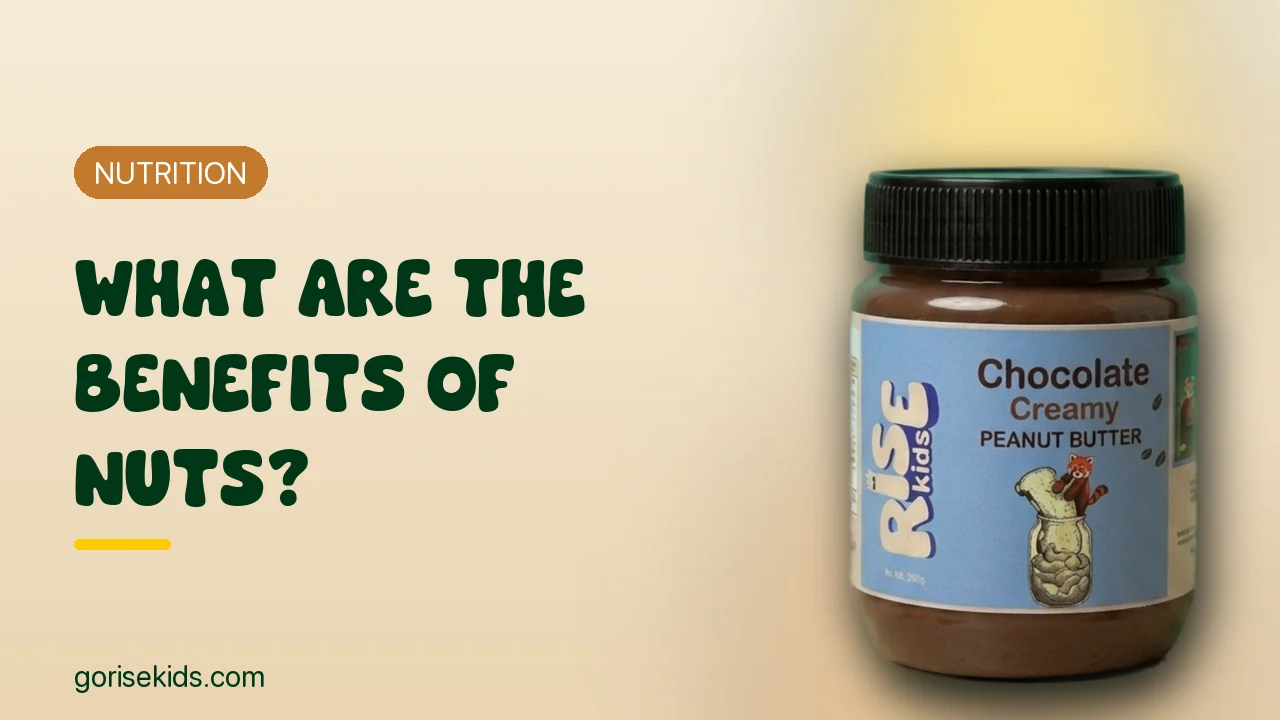
Many children happily eat nut butter long before they'll eat a whole nut. That makes a jar of natural peanut butter one of the simplest ways to get these benefits in — spread, stirred or blended — without a battle at the table. Just choose one with a short ingredient list and no added sugar or palm oil.
Frequently Asked Questions
At what age can children eat nuts? Nut butters and ground nuts can start from around 6 months as part of solids. Whole nuts should wait until about 4–5 years, when the choking risk drops.
Are nuts fattening for children? Nuts are calorie-dense, but for active, growing children that energy is useful — and the fats are the healthy kind. The key is sensible portions: a small handful, or a tablespoon of nut butter.
Which nuts are best for kids? Variety is best — peanuts, almonds, cashews and walnuts each bring something. Peanuts are especially good value for protein and lysine; walnuts are notably rich in brain-friendly fats.
Can nuts replace other protein foods? They're a great addition, not a full replacement. Combine nuts with dairy, dal, eggs or soy across the day for a balanced protein intake.
Conclusion
Nuts are small, but they punch far above their size — protein, brain-building fats, fibre and the very minerals Indian kids tend to miss, all in one handful.
Serve them in a form that's safe for your child's age, keep an eye on allergies, and let this tiny food do some big work. For the youngest eaters, a spoon of smooth, natural nut butter is the easiest start of all.
References & Scientific Sources
- Indian Council of Medical Research & National Institute of Nutrition. "Nutrient Requirements for Indians 2020." ICMR-NIN. https://www.nin.res.in
- National Institute of Nutrition. "Indian Food Composition Tables 2017." NIN.
- American Academy of Pediatrics. "Early Introduction of Allergenic Foods & Choking Hazards." AAP.
- World Health Organization. "Essential Fatty Acids in Early Child Development." WHO.
Protein by the spoonful.
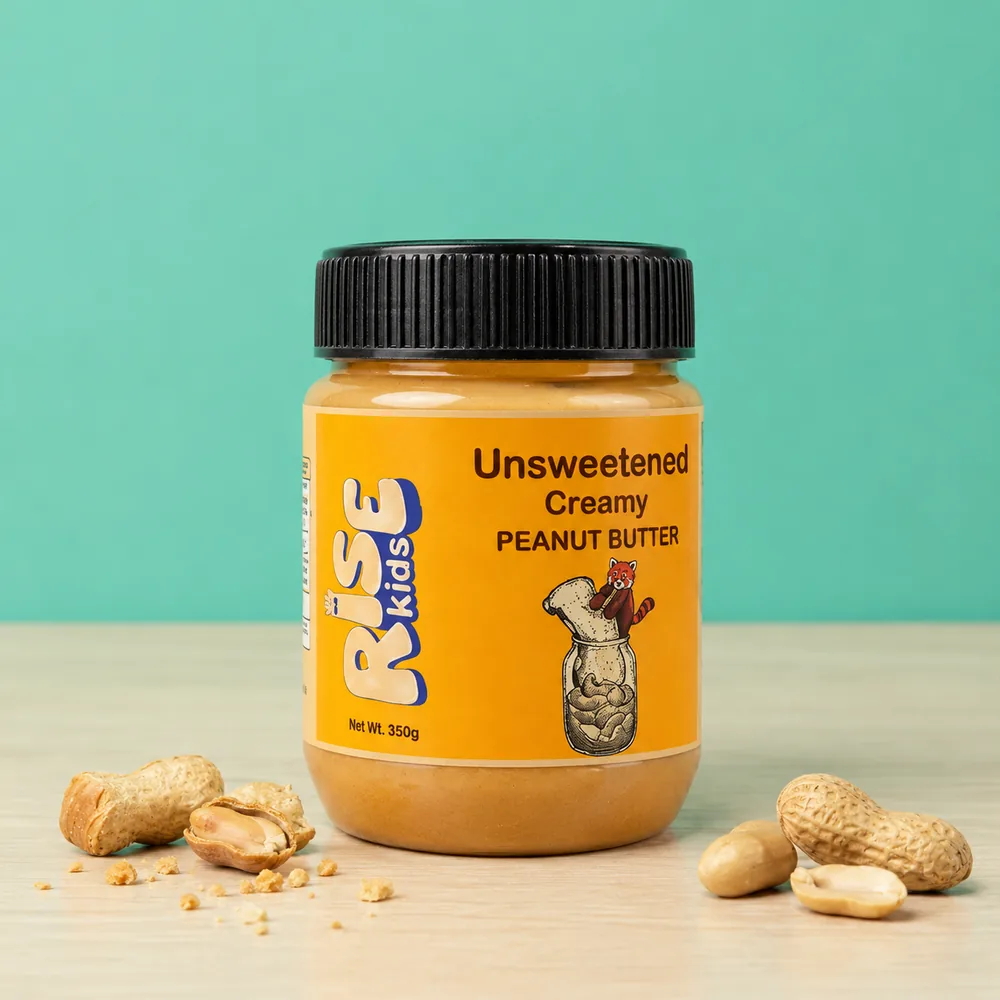
Just peanuts — nothing else. Two tablespoons of our creamy peanut butter deliver 8g of plant protein your child will actually ask for.
Part of
Peanut Butter & NutsStart here
Why Peanut Butter Is the Easiest Way to Add Protein to Your Child's Diet
Two tablespoons of peanut butter can add 8–9g of protein — no cooking, no fuss. Here's why a humble jar of peanut butter is one of the simplest protein wins for busy Indian families.
Share this knowledge
Help other parents raise healthy champions!