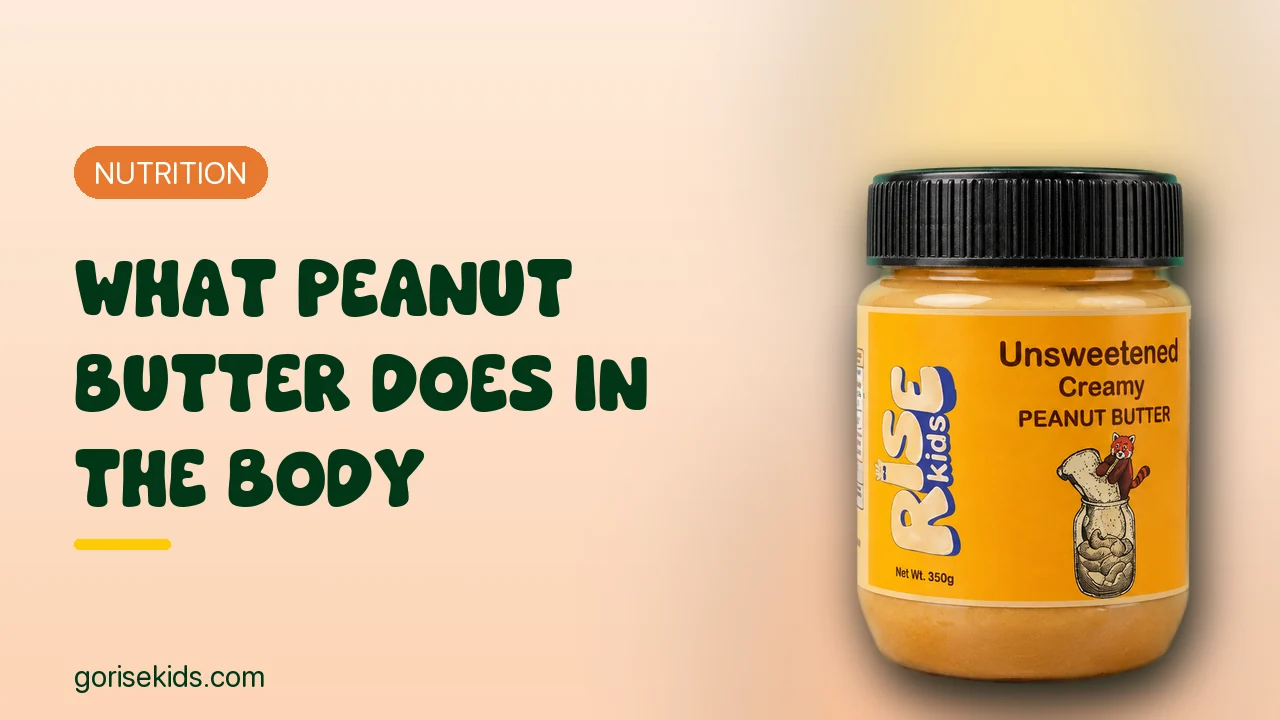
We talk a lot about what's in a food. But parents rarely get the more interesting answer: what actually happens once a child eats it?
Peanut butter is a great example, because it does so much. Follow a single spoon of it through your child's body and you'll see exactly why it's more than a tasty spread — and why it leaves them steadier and fuller than a biscuit ever could.
Key Takeaways
- Peanut butter's fat and protein slow digestion, giving steady energy instead of a sugar-spike-and-crash.
- Its protein is broken into amino acids that build muscle, enzymes and immune cells.
- Healthy fats support brain development and help the body absorb fat-soluble vitamins.
- Fibre feeds a healthy gut and keeps kids full between meals.
- The effect depends on the jar: an unsweetened, natural peanut butter does all this; a sugary one partly undoes it.
Minute 0: The First Bite
It starts in the mouth. Peanut butter is rich and satisfying, and that texture signals satiety — the "I've had something substantial" feeling. This is the first reason it works better than a light, sugary snack: the body registers it as real food, so your child is less likely to keep grazing.
Minutes 5–30: Slow and Steady in the Stomach
Here's where peanut butter shines. Because it's high in fat and protein, it digests slowly. The stomach empties gradually, and sugar enters the bloodstream in a slow trickle rather than a flood.
Compare that to a biscuit or sweet: fast carbs cause a quick blood-sugar spike, a burst of energy, then a crash — the familiar cycle of hyperactivity followed by crankiness and more cravings. Peanut butter flattens that curve. The result is steady energy and a calmer, more focused child between meals. It's the practical meaning of the 25% Rule: a snack should sustain, not just spike.
Hours 1–3: Protein Gets to Work
In the small intestine, the protein in peanut butter is broken down into amino acids — the body's building blocks. A growing child puts these straight to use:
- Building and repairing muscle.
- Making enzymes that run digestion and metabolism.
- Producing antibodies for the immune system.
Peanuts are especially rich in lysine, the amino acid most Indian grains are short on — so peanut butter on whole-grain toast gives the body a more complete set of amino acids than either food alone.
Meanwhile: Fats Feed the Brain
The unsaturated fats in peanut butter are absorbed and used in two big ways. First, they're raw material for the brain, which grows rapidly in childhood and is built largely from fat. Second, dietary fat is what allows the body to absorb fat-soluble vitamins (A, D, E and K) — so those fats are also helping your child get more out of the rest of their meal.
In the Gut: Fibre Does Its Quiet Job
Peanut butter brings fibre, which feeds beneficial gut bacteria and keeps things moving smoothly. Fibre also adds to that lasting-fullness effect, which is why a peanut-butter snack holds a child over far longer than a quick-burning sweet.
The Micronutrient Bonus
Along the way, peanut butter delivers a quiet dose of niacin, vitamin E, magnesium and some iron — nutrients that support energy metabolism, protect cells, and help fill the kind of hidden gaps common in Indian children's diets.
The One Thing That Changes the Whole Story
Everything above assumes a clean peanut butter. If the jar is loaded with added sugar and palm oil — as many are — you reintroduce the very sugar spike that natural peanut butter avoids, and swap healthy fats for the kind to skip.
So the body's response really does come down to the label. Read the ingredient list: it should be short. Our Unsweetened Creamy Peanut Butter is just dry-roasted peanuts — so your child gets the steady energy, not the crash.
A Safety Note
- Choking: For children under about four, always spread peanut butter thin or stir it into food — never give thick spoonfuls.
- Allergy: Peanut is a common allergen. Introduce early and in small amounts, and check with your paediatrician if there's a family history of allergies.
Frequently Asked Questions
Why does peanut butter keep kids full for longer? Its fat, protein and fibre slow down digestion, so the stomach empties gradually and blood sugar stays steady — no quick spike, no quick crash.
Does peanut butter give kids energy? Yes, but the steady kind. Instead of a fast sugar rush, peanut butter releases energy slowly over a couple of hours, which helps focus and mood between meals.
Is peanut butter good for the brain? The healthy unsaturated fats in peanuts support brain development, which is why nut butters are commonly recommended as part of a young child's diet.
Will peanut butter spike my child's blood sugar? A natural, unsweetened peanut butter won't — its fat and protein blunt the sugar response. A sweetened peanut butter with added sugar is a different story, which is why the ingredient list matters.
Conclusion
One spoon of peanut butter sets off a surprisingly busy chain of events: lasting fullness, steady energy, amino acids for growth, fats for the brain, fibre for the gut, and a quiet dose of minerals.
It's a lot of good work from a simple food — as long as you start with the right jar.
References & Scientific Sources
- Indian Council of Medical Research & National Institute of Nutrition. "Nutrient Requirements for Indians 2020." ICMR-NIN. https://www.nin.res.in
- National Institute of Nutrition. "Indian Food Composition Tables 2017." NIN.
- World Health Organization. "Essential Fatty Acids in Early Child Development." WHO.
- American Academy of Pediatrics. "Early Allergen Introduction & Choking Prevention." AAP.
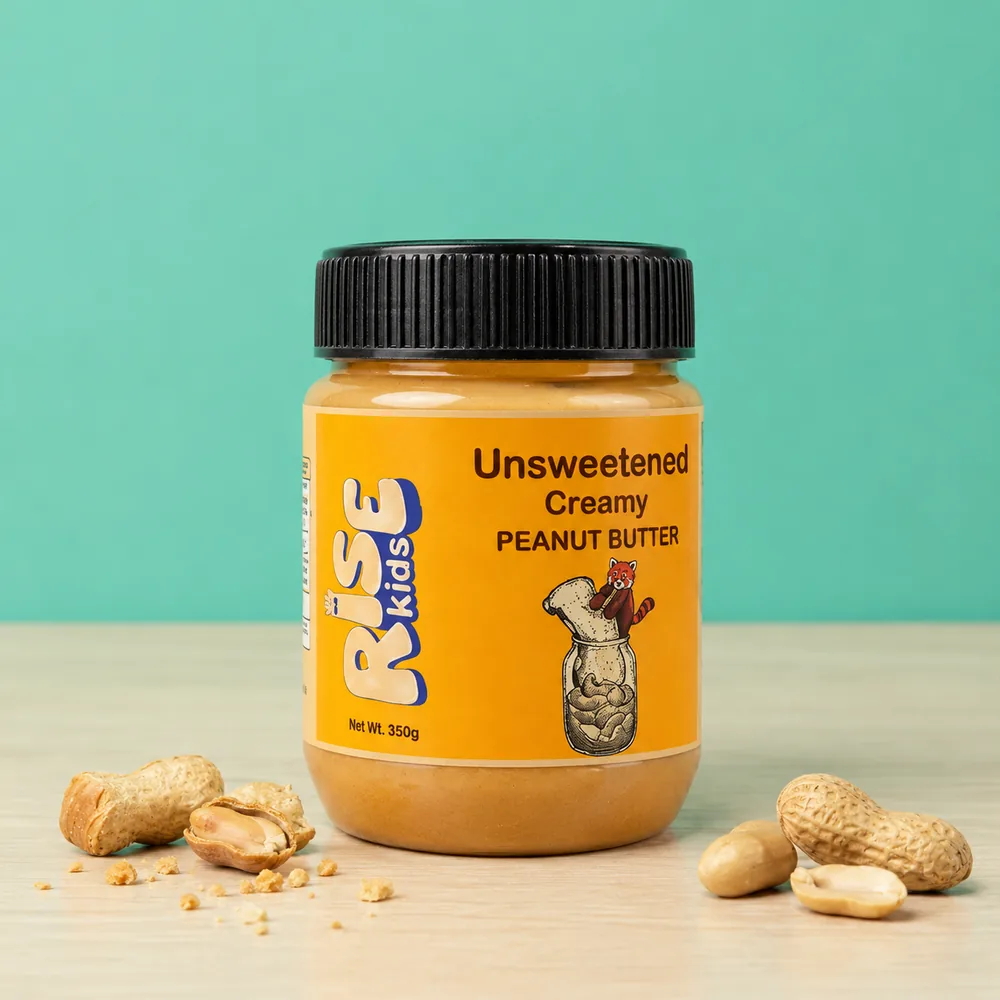
Protein by the spoonful.
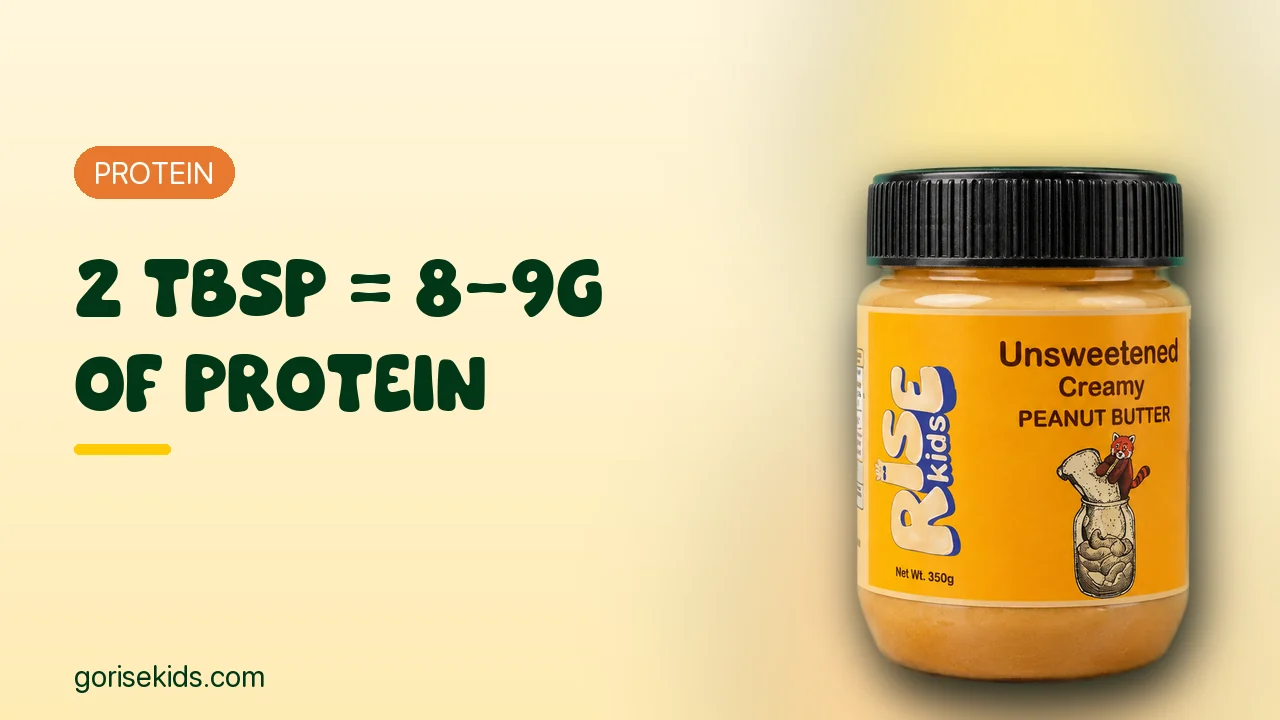
Just peanuts — nothing else. Two tablespoons of our creamy peanut butter deliver 8g of plant protein your child will actually ask for.
Part of
Peanut Butter & NutsStart here
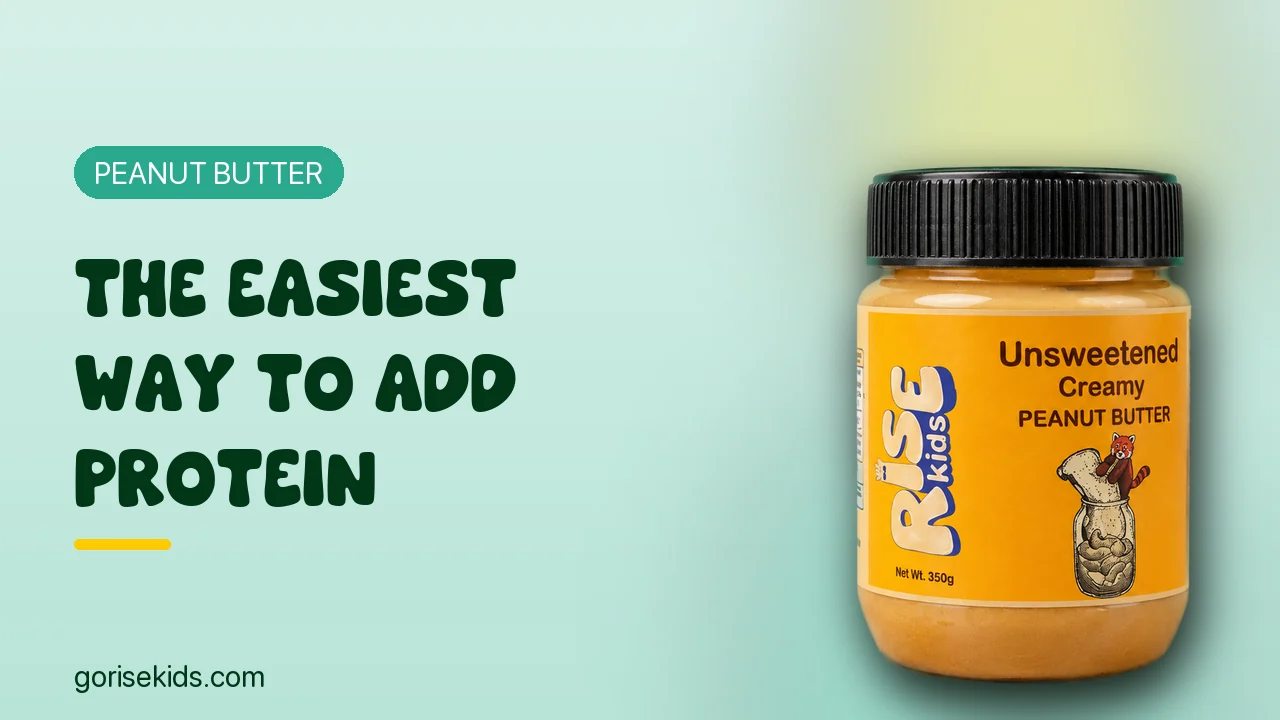
Why Peanut Butter Is the Easiest Way to Add Protein to Your Child's Diet
Two tablespoons of peanut butter can add 8–9g of protein — no cooking, no fuss. Here's why a humble jar of peanut butter is one of the simplest protein wins for busy Indian families.
Share this knowledge
Help other parents raise healthy champions!